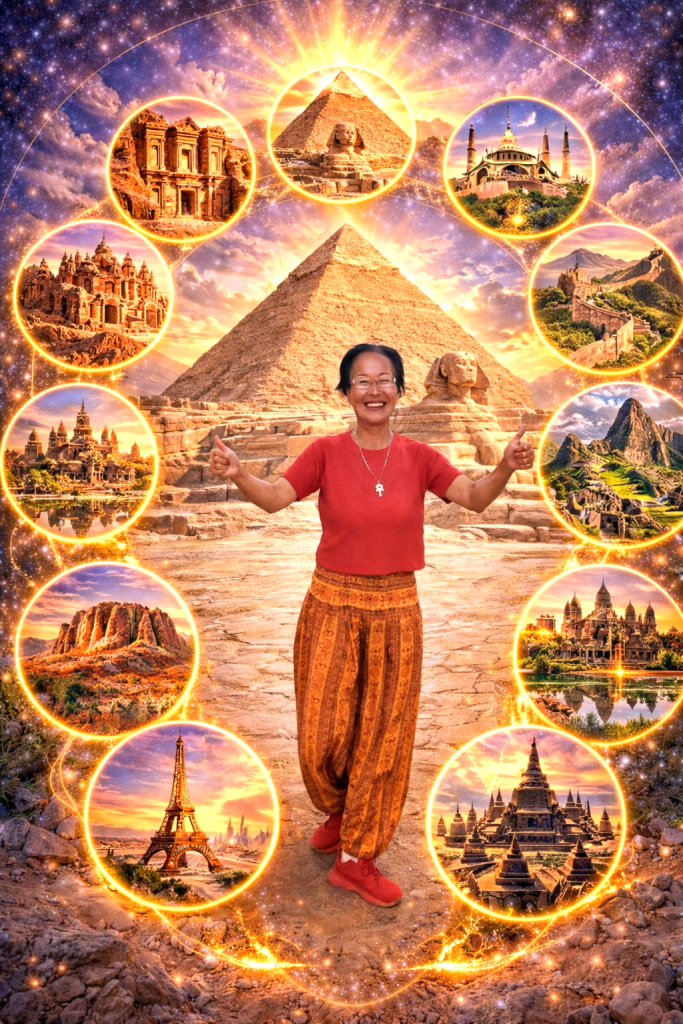
A pilgrimage does not end when the road turns back toward home.
If it did, it would only be travel—beautiful, moving, and ultimately sealed in memory.
The deeper invitation of any pilgrimage is this:
that the journey continues inside ordinary life.
What you encountered—whether through places, people, silence, challenge, or insight—was never meant to remain a story you tell. It was meant to become a way you stand, listen, and choose.
Wisdom that remains in memory eventually fades.
Wisdom that is lived reshapes perception.
The Subtle Risk After the Journey
After meaningful experiences, there is a quiet danger:
to preserve them instead of embodying them.
We replay moments.
We protect insights.
We compare present life to the clarity of the road.
But memory alone cannot transform daily life.
Only integration can.
Integration asks a harder, humbler question than “What did I experience?”
It asks:
“How will this change the way I live when no one is watching?”
From Peak Experience to Grounded Presence
Pilgrimages often bring heightened awareness—openness, reverence, connection, simplicity. These states feel fragile once routines return.
The mistake is trying to hold onto the state.
The wisdom is learning to translate the state into posture.
Not:
constant inspiration
permanent clarity
emotional elevation
But:
steadier honesty
gentler self-treatment
clearer boundaries
slower, more conscious responses
Lived wisdom is quieter than memory.
It does not announce itself.
What the Journey Actually Taught (When Stripped of Romance)
When the layers of scenery and symbolism fall away, most pilgrimages teach remarkably simple truths:
You need less than you thought
Presence matters more than control
Resistance creates more suffering than circumstance
Kindness—toward self and others—is practical, not sentimental
The body and breath are trustworthy guides
You are allowed to be unfinished
These lessons are not extraordinary.
They are livable.
How to Integrate the Lessons of the Journey (Practical Actions for Lived Wisdom)
1. Choose One Daily Translation
Instead of asking, “How do I honor the whole journey?” ask:
“What is one small way I live this today?”
Examples:
If the journey taught simplicity → reduce one unnecessary obligation
If it taught presence → take one undistracted walk
If it taught self-compassion → soften one inner criticism
Integration happens through small fidelity, not grand reenactment.
2. Let Behavior Change Before Identity
Do not say, “I am now someone who has awakened / healed / transformed.”
Say instead:
“I pause more often.”
“I listen longer before responding.”
“I recover faster when I fall into old patterns.”
Wisdom lives in behavioral shifts, not self-descriptions.
3. Allow the Lessons to Be Tested
Real integration invites friction.
Old triggers will return.
Habits will reappear.
Clarity will blur.
This is not failure—it is confirmation that the wisdom is becoming functional.
Each time you respond with even 5% more awareness or kindness than before, the pilgrimage is still unfolding.
4. Create a Simple Anchor Ritual
Not a performance—an anchor.
Examples:
a brief morning breath with one remembered phrase
touching the ground before starting the day
a nightly question: “Where did I live the lesson today?”
This keeps wisdom embodied rather than archived.
5. Release the Need to Explain the Journey
You do not owe coherence or narration to anyone.
Some experiences are integrated best when they are not over-articulated. Let them inform how you move, not how you speak.
Lived wisdom is recognizable without explanation.
6. Accept That Integration Is Cyclical
You will forget.
You will remember.
You will forget again.
This is not regression—it is rhythm.
Each cycle deepens the wisdom from concept into reflex.
Closing Reflection
A pilgrimage fulfilled does not make life extraordinary.
It makes ordinary life inhabitable with more truth.
When the road becomes how you breathe, choose, forgive, and return—
The journey has not ended.
It has become lived wisdom.
Author Bio
The author is a long-time student of inner awareness, whose understanding has been shaped more by lived experience than by theory.
After years of study and practice, it was real‑world travel—encounters with unfamiliar cultures, economic disparity, and personal triggers—that revealed how easily unconscious judgment can return when awareness lapses.
This work is not offered from a place of authority, but from honest self‑reflection. It is written for anyone interested in meeting life with greater presence, humility, and clarity—especially in moments of discomfort or difference.
Soul statement: I am not teaching concepts here.
I am transmitting a lived frequency.
☮️ 💖 🌎 ☮️ 💖 🌎 ☮️ 💖 🌎 ☮️ 💖 🌎 ☮️ 💖 🌎 ☮️ 💖 🌎 ☮️ 💖 🌎 ☮️ 💖