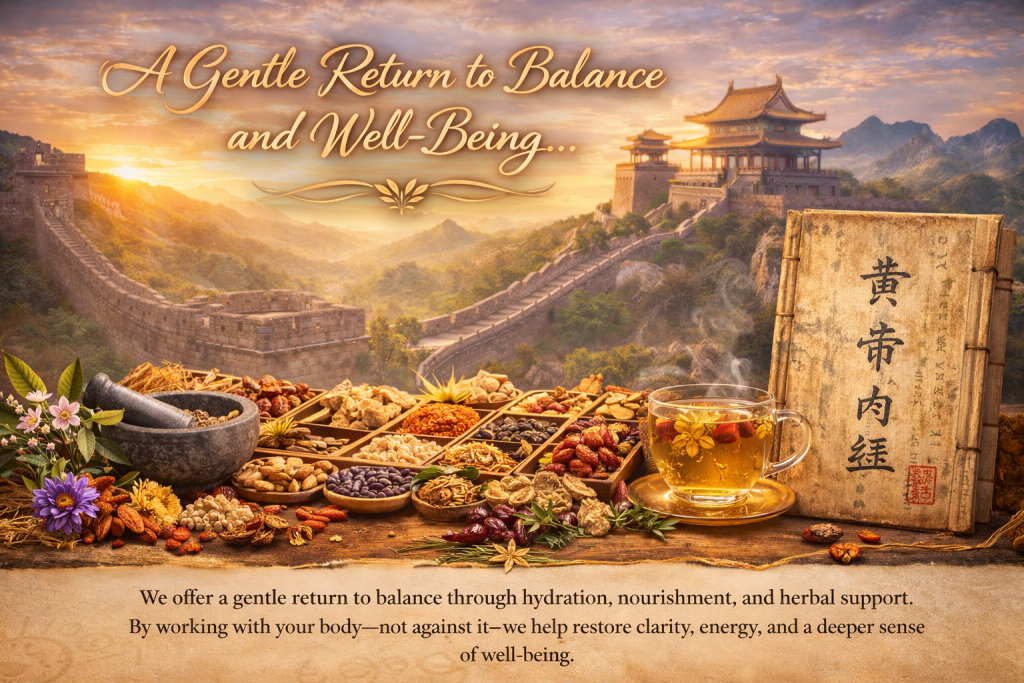
— Why Does the Body “Harbor Parasites”? A Return to Balance Through Dampness, Heat, and Inner Regulation—
I. From the Huangdi Neijing: Why Do “Parasites” Arise in the Body?
In the Huangdi Neijing, what is described as “worms” or “parasites” is not limited to literal organisms. It points to a deeper condition—a body that has lost internal harmony.
It can be distilled into one simple principle:
Parasites arise from deficiency, grow in dampness, and thrive in internal impurity.
1. Weak Spleen and Stomach — The Root Cause
The text emphasizes that the spleen is the foundation of postnatal vitality.
When the digestive system weakens:
Food is not fully transformed
Fluids accumulate as dampness
The internal environment becomes turbid
This creates a condition similar to decaying soil, where unwanted growth can emerge.
In modern terms, this may reflect:
Gut imbalance
Fermentation and stagnation
Microbial dysregulation
2. Internal Damp-Heat — The Key Condition
In the traditional understanding:
Dampness is heavy, stagnant, and lingering
Heat accelerates decay and fermentation
When combined, they form a fertile ground for internal imbalance.
This may manifest as:
Bloating
Bad breath
Irregular digestion
A sense of heaviness in the body
These were often described as signs of “worm activity” in classical language.
3. Improper Diet — The External Trigger
Excess consumption of:
Cold foods
Sugary foods
Greasy or rich meals
Unclean food
can weaken digestion and contribute to internal dampness and stagnation.
II. How to Eliminate “Toxic Parasites” — The Classical Approach
The ancient method does not focus solely on “killing.”
Instead, it emphasizes:
Changing the internal environment so that such conditions no longer arise.
Three core approaches:
1. Transform Dampness (Change the Terrain)
Strengthen digestion
Regulate fluid metabolism
Restore internal clarity
2. Clear Heat (Reduce Internal Decay)
Support intestinal cleansing
Reduce excess internal heat
Avoid overstimulating foods
3. Move Qi and Resolve Stagnation (Encourage Elimination)
Promote circulation
Improve digestive movement
Prevent accumulation
III. Herbal Insights from the Bencao Gangmu
The Bencao Gangmu provides more direct herbal methods, though often with strong properties.
Here are several commonly referenced herbs:
1. Chinaberry Root Bark (Ku Lian Pi)
Antiparasitic
Relieves discomfort
Note: Bitter and cold; should be used with care.
2. Rangoon Creeper Seed (Shi Jun Zi)
Expels intestinal worms
Supports digestion
Characteristic: Gentle and often used for children.
3. Areca Nut (Bing Lang)
Promotes movement
Expels parasites
Reduces stagnation
Note: Strong in action; not for long-term use.
4. Pumpkin Seeds (Food-Based Option)
Mild antiparasitic effect
Supports intestinal health
A safer and more accessible option for regular use.
IV. Dietary Therapy — Gentle and Sustainable
Ancient practice places strong emphasis on daily nourishment rather than aggressive intervention.
1. Chinese Yam Porridge
Strengthens digestion
Improves nutrient absorption
2. Coix Seed (Job’s Tears)
Drains dampness
Clears internal turbidity
3. Aged Tangerine Peel + Ginger
Moves Qi
Warms digestion
Reduces fermentation
4. Pumpkin Seeds (Daily Use)
A small handful regularly
Supports long-term intestinal balance
V. A Deeper Reflection
In classical language, “parasites” may point not only to organisms, but to:
Internal imbalance
Accumulated stagnation
Disrupted ecological harmony within the body
So the deeper question is not:“How do we kill them?”
But rather:“Why has the body become a place where they can remain?”
VI. A Gentle Closing Reflection
When the internal environment becomes turbid, unwanted conditions arise.
When the body returns to clarity and balance, many disturbances naturally dissolve.
This is not a battle, but a restoration.
If you feel resonance or tension from these words, pause for a moment—and return to your breath.