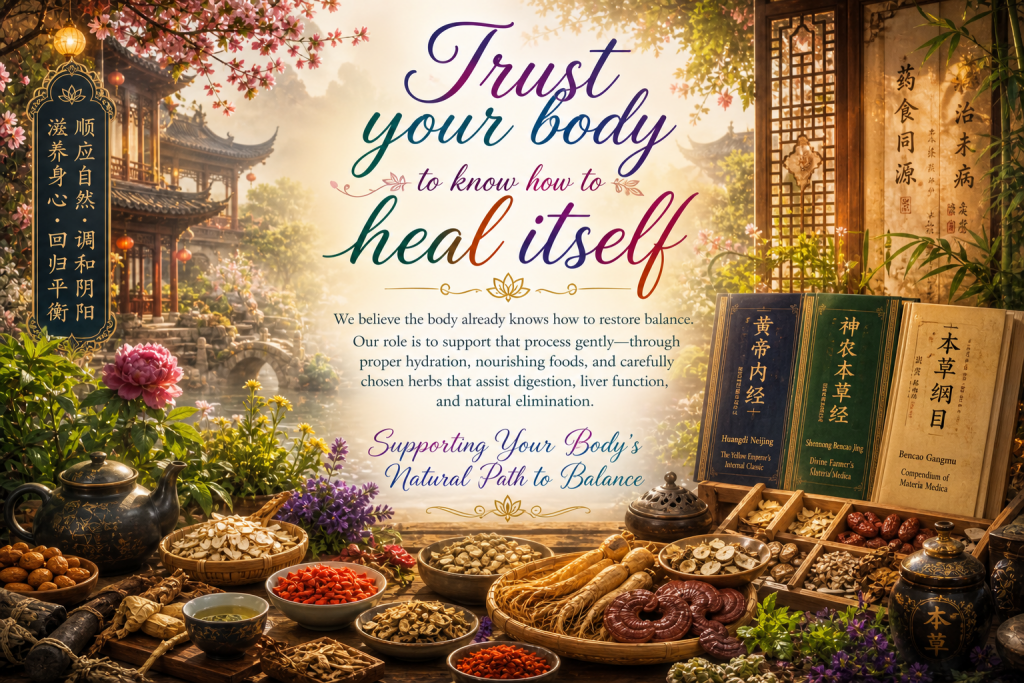
In Traditional Chinese Medicine (TCM), the concept of “Unity of Heaven and Humanity” is not an abstract philosophy, but a practical framework for living. It reminds us that human beings are not separate from nature, but an integral part of its rhythms. Seasonal changes, day–night cycles, and environmental shifts all directly influence the body’s balance of qi, blood, yin, and yang. When we align with these rhythms, health emerges; when we resist them, imbalance and illness follow.
From a medical perspective, TCM views the body as a dynamic system of balance—where yin and yang must harmonize, qi and blood must flow freely, and organ systems must coordinate. “Unity” means synchronizing the body’s internal rhythms with the external world. Among all methods, dietary therapy and herbal medicine offer the most gentle and sustainable ways to achieve this alignment.
Eating with the Seasons: Food as Everyday Medicine
One of the core principles of TCM is seasonal nourishment. Rather than eating the same foods year-round, we adjust our diet according to nature’s cycles.
Spring (Growth and Expansion)
As life begins to flourish, liver energy becomes more active. The focus is on supporting upward and outward movement.
→ Recommended: leafy greens, sprouts, light vegetables like spinach and celery; chrysanthemum and goji berry tea
→ Avoid: heavy, greasy foods that hinder liver qi
Summer (Fullness and Vitality)
Yang energy peaks, and the heart may become overheated. The goal is to clear heat and calm the mind.
→ Recommended: mung bean soup, winter melon, lotus seeds, lotus leaf tea
→ Caution: excessive cold foods can weaken digestion
Autumn (Contraction and Dryness)
Dry air affects the lungs. The focus shifts to moistening and preserving yin.
→ Recommended: pears, lily bulb, honey, white fungus
→ Principle: nourish without creating heaviness
Winter (Storage and Restoration)
Yang retreats inward, and the kidneys take center stage. This is a time for warmth and conversation.
→ Recommended: black beans, lamb, ginger, longan
→ Principle: tonify gently without excess
Eating in this way is a direct expression of “unity”—not chasing superfoods, but honoring timing and context.
The Herbal Path: Gentle Correction of Internal Imbalance
In TCM, herbs are not merely for treating illness—they are tools for fine-tuning the body’s internal landscape. Their power lies not in intensity, but in appropriateness.
Regulating Qi (Energy Flow)
Herbs like dried tangerine peel and rose help relieve stagnation, especially for those under emotional stress.
Tonifying Qi (Vital Energy)
Astragalus and ginseng (used with care) support energy and immunity in those who feel depleted.
Nourishing Blood
Angelica root and red dates support circulation and vitality, especially for those with fatigue or pallor.
Nourishing Yin
Ophiopogon and dendrobium help counter internal dryness and heat, common in modern lifestyles marked by stress and lack of rest.
However, herbal use is not about random supplementation. True harmony requires understanding one’s constitution—whether tendencies lean toward cold, heat, deficiency, or excess—and responding accordingly.
Diet and Emotion: The Overlooked Dimension
TCM recognizes that emotions directly affect physical health.
- Anger disrupts the liver and impairs energy flow
- Grief weakens the lungs and immunity
- Overthinking burdens the spleen and digestion
👉 Health, therefore, is not just about what we eat, but how we live.
Simple yet profound practices include:
- Maintaining consistent sleep patterns
- Engaging in moderate movement to promote circulation
- Cultivating emotional balance to reduce internal strain
A Modern Misstep: Living Against Nature
Many contemporary health issues arise from a disconnect with natural rhythms:
- Consuming cold drinks in winter and relying on air conditioning in summer
- Staying up late and disrupting circadian cycles
- Seeking quick fixes instead of long-term nourishment
👉 These habits represent a deeper pattern—resisting rather than aligning with nature. TCM does not pursue speed, but emphasizes gradual, sustained balance.
Conclusion: Returning to Rhythm
“Unity of Heaven and Humanity” is not a technique—it is a return.
It reminds us that health does not come from complexity, but from consistent, mindful choices: resting when it is time to rest, eating what the season provides, and allowing space for recovery.
Dietary therapy and herbs are simply bridges. The true goal is to reconnect with the body’s signals and move in harmony with the world around us.
When we stop trying to control the body and begin to listen, it often knows how to heal itself.