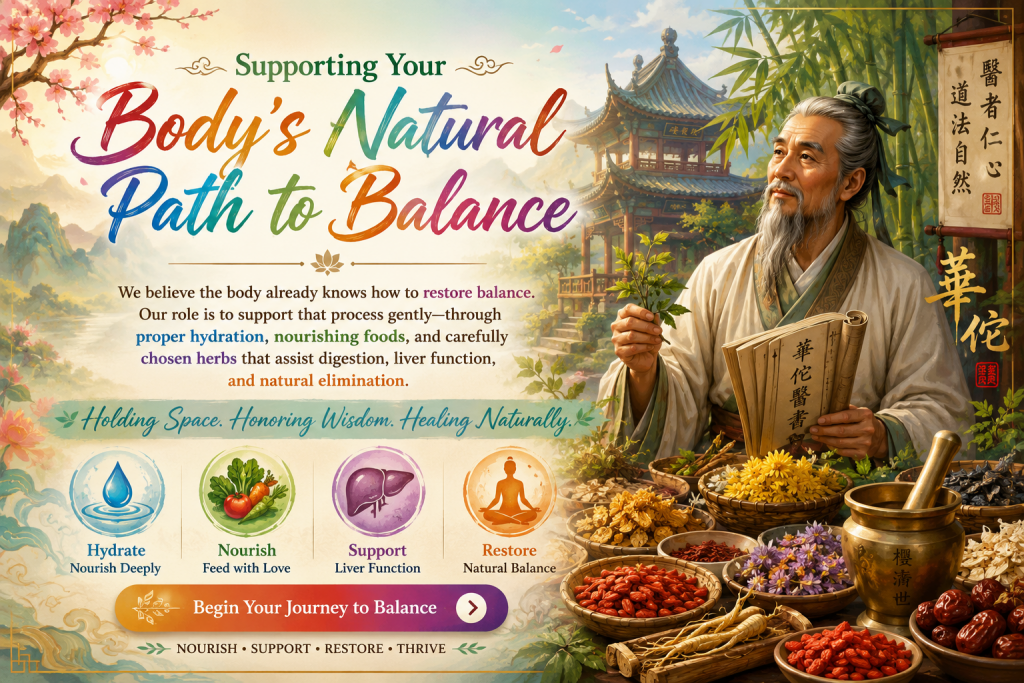
Hua Tuo, the legendary physician of the Eastern Han Dynasty, is remembered as one of the greatest healers in Chinese history. Beyond his remarkable medical skills, he strongly emphasized the philosophy of preventing illness before it arises. He believed that true health does not come primarily from medicine, but from harmony between the human body and nature.
Moderation in diet, regular daily habits, emotional balance, and the intelligent use of herbal remedies together create smooth circulation of energy and blood, balanced organ function, and inner well-being.
In modern society, people live under chronic stress, irregular sleep patterns, and highly processed diets. These habits contribute to inflammation, fatigue, and many chronic diseases. Revisiting Hua Tuo’s philosophy of natural healing may be more relevant today than ever before.
I. Hua Tuo’s Dietary Philosophy: Health Through Balance
Hua Tuo taught:
“The body should be exercised, but never to the point of exhaustion.”
The same principle applies to food. Diet should nourish the body without overwhelming it.
1. Eat Lightly and Naturally
Traditional Chinese medicine views the digestive system as the “foundation of postnatal life.” Excessive consumption of fried foods, sugar, alcohol, and processed meals burdens the body and creates internal imbalance.
A Hua Tuo-inspired diet emphasizes:
- Light, simple meals
- Avoiding overeating
- Eating natural foods
- Following seasonal rhythms
Examples include:
- Spring: Nourish the liver with green vegetables
- Summer: Cool the heart with bitter melon, lotus seeds, and mung beans
- Autumn: Moisturize the lungs with pears, honey, and lily bulbs
- Winter: Strengthen the kidneys with black beans, yams, and walnuts
This seasonal approach closely aligns with modern nutritional science, which increasingly recognizes the value of seasonal and diverse eating patterns.
2. Eat Until You Are 70% Full
Hua Tuo believed overeating weakens digestion and blocks the body’s natural energy flow.
Modern research similarly shows that moderate caloric restriction may:
- Reduce chronic inflammation
- Improve metabolism
- Lower the risk of diabetes and cardiovascular disease
True nourishment is not about eating excessively, but eating wisely and moderately.
3. Food as Medicine
Traditional Chinese medicine teaches:
“Therapeutic food is often better than medicine.”
Many everyday foods function as gentle medicinal remedies:
- Food Traditional Benefit
- Ginger Warms digestion and improves circulation
- Red dates Nourish energy and blood
- Chinese yam Strengthens digestion
- Lotus seeds Calm the mind and support sleep
- Black sesame Nourishes the liver and kidneys
Consistent daily nourishment is often safer and more effective than aggressive supplementation.
II. Natural Healing: The Body’s Innate Ability to Recover
Hua Tuo’s medical philosophy focused less on “fighting disease” and more on restoring balance.
Natural healing includes:
- Restorative sleep
- Emotional stability
- Moderate movement
- Fresh air and sunlight
- Herbal support
- Healthy circulation of energy and blood
The human body possesses a profound capacity for self-repair.
Many illnesses are rooted in:
- Chronic stress
- Physical inactivity
- Long-term inflammation
- Emotional suppression
- Constant overexertion
Hua Tuo famously created the Five Animal Exercises (Wu Qin Xi), movements inspired by the tiger, deer, bear, monkey, and bird. These exercises were designed to improve circulation, strengthen the organs, and maintain vitality.
Modern science increasingly confirms that:
- Gentle exercise enhances immune function
- Deep sleep promotes cellular repair
- Chronic anxiety weakens immunity
Natural healing, therefore, is not mysticism. It is the practice of aligning human life with biological and natural rhythms.
III. Ten Important Herbs for Health and Longevity
The following herbs have been widely used in traditional Chinese medicine for centuries. However, pregnant individuals, people with chronic illnesses, or those taking medications should consult a qualified healthcare professional before using herbal remedies.
1. Ginseng
Benefits:
- Boosts energy and vitality
- Reduces fatigue
- Supports resilience
Best for: People with low energy or weakness
Caution: Excessive use may aggravate insomnia or high blood pressure
2. Astragalus
Benefits:
- Supports immune function
- Strengthens overall vitality
- Helps recovery from fatigue
Modern studies suggest it may help regulate immune responses.
3. Reishi Mushroom (Lingzhi)
Benefits:
- Calms the mind
- Supports immunity
- Reduces fatigue
Often called the “mushroom of immortality.”
4. Goji Berry
Benefits:
- Nourishes the liver and eyes
- Rich in antioxidants
- Helps eye fatigue
Especially beneficial for people who spend long hours on screens.
5. Dong Quai (Angelica Sinensis)
Benefits:
- Nourishes blood circulation
- Traditionally used for women’s health
- Supports healthy complexion
6. Ginger
Benefits:
- Warms the body
- Supports digestion
- Relieves nausea
One of the most practical healing foods used worldwide.
7. Hawthorn Berry
Benefits:
- Supports digestion
- Helps process fatty foods
- Reduces food stagnation
8. Chrysanthemum
Benefits:
- Supports eye health
- Helps cool excess internal heat
- Relieves eye strain
Popular among people with heavy screen exposure.
9. Licorice Root
Benefits:
- Harmonizes herbal formulas
- Soothes the lungs and throat
- Has anti-inflammatory properties
Caution: Excessive long-term use may affect blood pressure
10. Aged Tangerine Peel (Chen Pi)
Benefits:
- Supports digestion
- Reduces bloating
- Helps regulate digestive energy
Especially useful for sluggish digestion.
IV. True Wellness Is About Balance, Not Excess
One of the greatest modern misunderstandings about health is the belief that wellness comes from:
- Endless supplements
- Extreme detoxes
- Heavy tonic use
- Fast results
Hua Tuo’s wisdom points in the opposite direction.
A healthy person is someone whose:
- Energy flows smoothly
- Sleep is stable
- Emotions are balanced
- Eating habits are moderate
- Body can naturally recover
The highest form of healing is not constantly adding more to the body, but reducing what harms it.
Conclusion
Hua Tuo’s philosophy of diet and natural healing reminds us that: Human beings are not machines — we are part of nature.
When we live in harmony with the seasons, eat moderately, move regularly, care for our emotional well-being, and use herbs wisely, the body gradually regains its natural vitality and balance.
Lasting health does not come from expensive medicine alone, but from the small habits we practice every day.