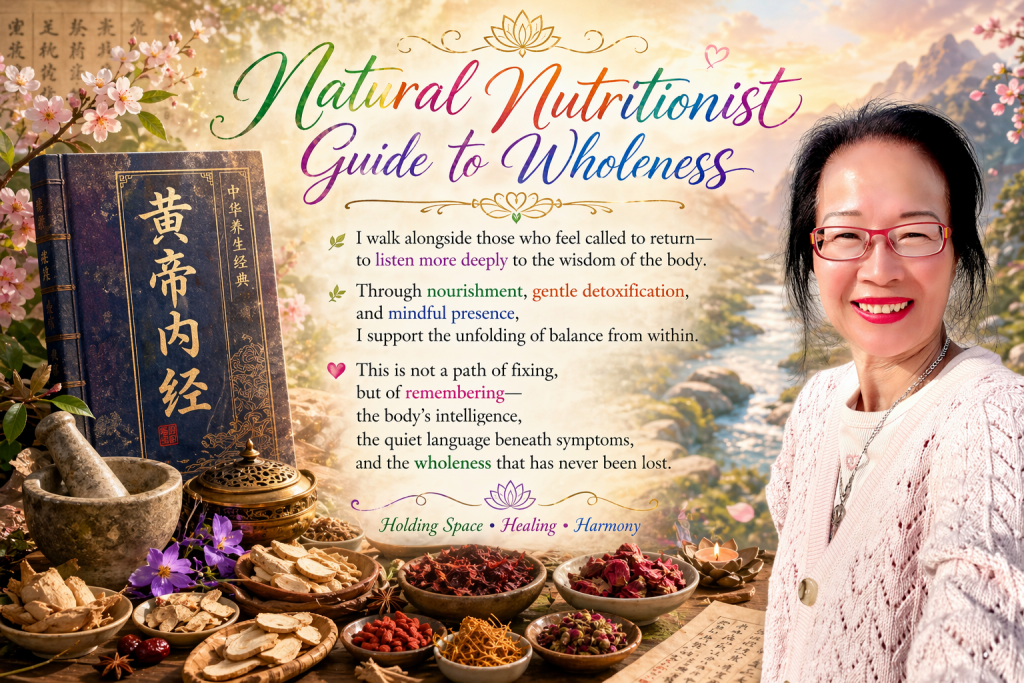
When many people think about “wellness” or “health preservation,” the first thing that comes to mind is often one word: Supplementation.
- Feeling tired? Take tonics.
- Poor sleep? Nourish the brain.
- Low energy? Strengthen the kidneys.
- Getting older? Start taking expensive herbal remedies.
Modern wellness culture often teaches us that health comes from constantly adding something to the body.
But the deeper philosophy behind Bencao Gangmu — the legendary Ming Dynasty medical text compiled by Li Shizhen — teaches something very different:
👉 True wellness is not about “more.” It is about balance.
After spending nearly thirty years documenting herbs, medicines, and natural substances, Li Shizhen’s core insight was never that the body should endlessly be “boosted” or “fortified.” Instead, traditional Chinese medicine emphasizes restoring harmony within the body.
👉 This is one of the most profound ideas in Chinese medical philosophy.
1. Wellness Is Not About Constantly “Boosting” the Body
One of the biggest misconceptions today is the belief that wellness equals supplementation.
But according to the principles reflected in Bencao Gangmu:
Disease often comes not from deficiency alone, but from imbalance.
For example:
👉 Someone suffering from stress, insomnia, and internal heat may continue consuming warming tonics.
👉 Someone with digestive stagnation and excess dampness may overeat rich “nourishing” foods.
👉 Someone experiencing emotional stagnation may mistake it for simple fatigue or blood deficiency.
The result is often the opposite of health:
- More inflammation,
- Worse sleep,
- Increased fatigue,
- Heaviness in the body,
- Emotional irritability.
Traditional Chinese medicine recognizes that:
Every herb has its own nature, and every person has a different constitution.
- Some herbs are warming, others cooling.
- Some disperse, others stabilize.
- Some nourish, others clear excess.
Without understanding the body’s actual condition, excessive supplementation can create even greater imbalance.
True healing is not about endlessly adding more. It is about restoring equilibrium.
2. The Core Wisdom of Bencao Gangmu: Balance Between Yin and Yang
One of the foundational principles of Chinese medicine is: “When yin and yang are in harmony, the spirit remains well.”
Health is not seen as a static state, but as a dynamic balance of opposing yet complementary forces.
Much of the classification of herbs in Bencao Gangmu reflects this philosophy:
- Heat is treated with cooling substances,
- Cold is treated with warming substances,
- Stagnation is dispersed,
- Dryness is moistened,
- Excess is reduced,
- Deficiency is nourished.
👉 The goal is never extremism.
👉 The goal is restoration of balance.
💠 Too Much Cold Damages Yang
💠 Too Much Heat Damages Yin
🌟 Excessively cold foods may weaken digestive energy.
🌟 Excessively spicy or heating foods may deplete the body’s fluids and calmness.
This is why Chinese medicine values moderation: The healthiest way is rarely the extreme way.
🗝️ Real wellness means learning to respond to the body rather than forcing the body into rigid trends or diets.
3. Emotional Imbalance Can Harm the Body More Than Food
Although Bencao Gangmu is a medical encyclopedia, it reflects a broader, understanding found throughout traditional Chinese medicine:
Emotions directly influence physical health.
- Long-term anger may disturb the liver.
- Excess worry may weaken digestion.
- Grief may affect the lungs.
- Fear may deplete the kidneys.
Many modern illnesses are not caused merely by poor nutrition.
They are also shaped by:
- Chronic stress,
- Emotional suppression,
- Anxiety,
- Burnout,
- Constant overstimulation.
🗝️ In this view, wellness is not only about what we eat.
🗝️ It is also about how we live, think, feel, and rest.
4. The Highest Form of Wellness Is Living in Harmony With Nature
Another major teaching reflected in Bencao Gangmu is the importance of seasonal living.
Human beings are understood as part of nature, not separate from it. Therefore, health practices should change with the seasons.
Spring: Focus on Flow
Spring is associated with rising energy and renewal. This season encourages:
- Movement,
- Emotional openness,
- Early rising,
- Gentle physical activity.
The emphasis is not on heavy nourishment, but on allowing energy to circulate freely.
Summer: Focus on Calmness and Cooling
Summer carries intense heat and activity. The body benefits from:
- Lighter foods,
- Emotional steadiness,
- Proper hydration,
- Moderate sweating,
- Mental calmness.
The goal is to prevent excess internal heat.
Autumn: Focus on Moisture and Reflection
Autumn is traditionally linked with dryness and the lungs. This season encourages:
- Moisturizing foods,
- Reduced spicy foods,
- Emotional stability,
- Slower rhythms.
The emphasis is on preservation and inward balance.
Winter: Focus on Rest and Conservation
Winter is associated with storing energy. This is a time for:
- More rest,
- Warmth,
- Reduced overexertion,
- Gentle nourishment.
Not aggressive supplementation — but conservation.
5. The Best Medicine Is Often a Balanced Lifestyle
🗝️ One of the deepest messages behind traditional Chinese medicine is surprisingly simple: Daily habits shape health more than expensive remedies.
Many people damage their health through:
- Irregular sleep,
- Chronic overwork,
- Emotional excess,
- Poor eating habits,
- Lack of movement,
- Constant stimulation.
Then they attempt to “fix” the damage through supplements alone.
But Chinese medicine teaches:
No tonic can compensate for continuous exhaustion and imbalance. Often, the most powerful forms of healing are ordinary:
- Consistent sleep,
- Calm emotions,
- Moderate eating,
- Regular movement,
- Mental stillness,
- Sustainable rhythms.
These are the true foundations of long-term vitality.
6. The Deepest Insight: Health Is Harmony, Not Control
What makes Bencao Gangmu timeless is not only its catalog of medicines.
It is the worldview beneath it. Human beings are not machines to be endlessly optimized. We are living systems that depend on rhythm, balance, adaptation, and harmony.
Illness is often not simply a “broken part.”
It may emerge from:
- Chronic imbalance,
- Emotional disharmony,
- Disconnection from natural rhythms,
- Excessive desire and overstimulation,
- Ignoring the body’s signals.
True wellness, therefore, is not about fighting the body. It is about listening to it.
Conclusion: The Highest Form of Wellness Is “Just Enough”
The wisdom of Bencao Gangmu reminds us that health is not found in extremes.
- Not in endless supplementation.
- Not in obsession.
- Not in forcing the body beyond its natural limits.
True vitality comes from:
🗝️ Balanced energy,
🗝️ Emotional steadiness,
🗝️ Rhythmic living,
🗝️ Proper rest,
🗝️ Inner calm,
🗝️ Harmony between body and nature.
In the end: Real wellness is not about constantly adding more to life. It is about restoring balance to the life already within us.
And perhaps that is the highest wisdom traditional medicine has to offer.