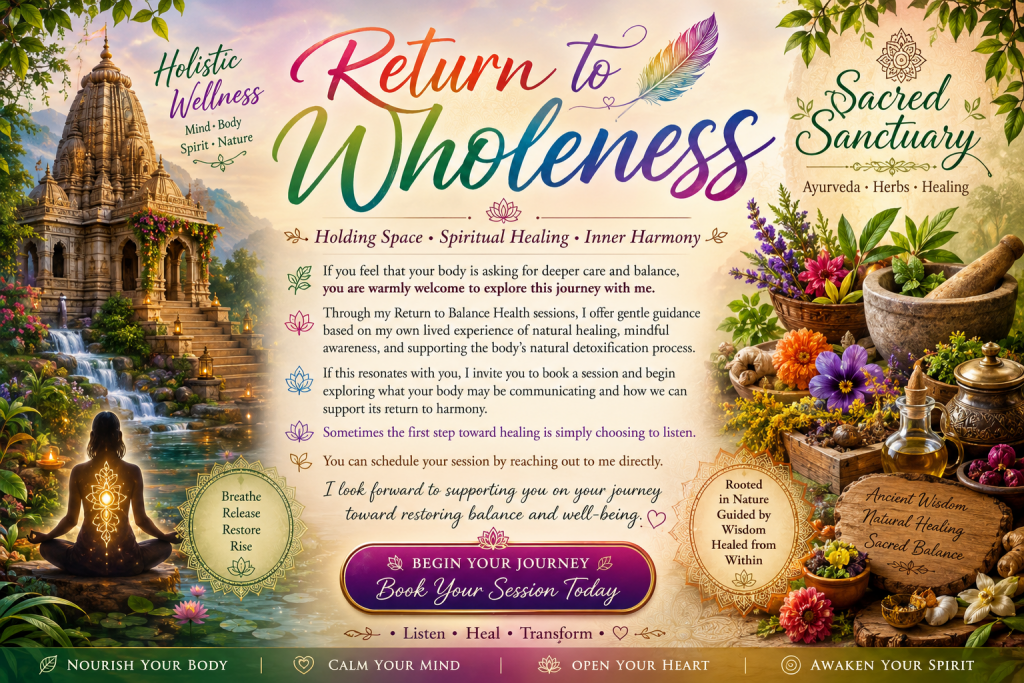
There comes a moment in many people’s lives when they realize that exhaustion is not merely physical, stress is not merely mental, and healing is not simply the absence of illness. Beneath chronic tension, emotional overwhelm, anxiety, fatigue, and inner emptiness often lies a deeper condition: fragmentation.
Fragmentation occurs when the body, mind, emotions, and spirit no longer move in harmony. Parts of the self become trapped in survival patterns — constantly scanning for danger, replaying emotional wounds, suppressing truth, or carrying unresolved fear.
Over time, survival energy can become so normalized that many people forget what inner peace, vitality, and true wholeness even feel like.
Yet countless spiritual traditions, holistic systems, and consciousness-based teachings share a common understanding:
Healing begins when the human system no longer identifies with survival alone, but reconnects with coherence, presence, and inner alignment.
This article explores how to transcend fragmentation, dissolve survival-based conditioning, elevate personal frequency, and cultivate a more balanced and restorative way of living.
Understanding Survival Energy
The human nervous system was designed to protect life. In moments of danger, the body activates survival responses:
fight, flight, freeze, or collapse. These responses are natural and necessary.
However, modern life often keeps people in prolonged psychological stress without true resolution. Emotional pain, fear, trauma, overstimulation, toxic environments, financial pressure, and chronic uncertainty can lock the body into a near-constant state of internal defense.
When survival energy dominates for long periods, a person may experience:
chronic fatigue, emotional numbness, anxiety, inflammation, mental fog, shallow breathing, hypervigilance, sleep disruption, or a feeling of being disconnected from oneself.
Spiritually, this state is often described as fragmentation — the soul’s energy becoming divided between fear, memory, stress, and external demands.
The body begins surviving instead of truly living.
Wholeness: Returning to Inner Coherence
Wholeness does not mean perfection. It means integration.
A whole person is not someone without wounds, but someone whose mind, emotions, body, and spirit are no longer fighting one another.
Many ancient healing traditions viewed wellness as harmony between:
- inner and outer life,
- thought and feeling,
- action and truth,
- body and consciousness,
- human existence and nature.
Healing therefore, becomes less about forcing outcomes and more about restoring internal balance. When coherence returns:
- the nervous system softens,
- emotional energy begins moving again,
- the body shifts toward restoration,
- and life force becomes less fragmented.
Dissolving the Survival Pattern
Survival patterns cannot always be “thought away.” They are often deeply stored within the nervous system, emotional memory, and subconscious conditioning.
Transformation begins by creating enough safety within oneself for the body to stop constantly defending itself.
1. Regulate the Nervous System Through Conscious Breathing
Breathing is one of the fastest ways to signal safety to the body.
Practice: Inhale slowly for 4–5 seconds. Exhale gently for 6–8 seconds. Continue for several minutes. Longer exhalations help calm survival responses and support nervous system regulation.
As breathing slows, the body often receives the message: “I am safe enough to relax.”
2. Stop Treating the Body as an Enemy
Many people unconsciously fight their bodies: criticizing symptoms, resisting emotions, suppressing exhaustion, or feeling betrayed by illness.
Yet healing deepens when the relationship with the body changes from conflict to cooperation. Do this daily, Place your hand on your chest or abdomen and say:
- “I am listening.”
- “Thank you for protecting me.”
- “You no longer need to stay in survival mode.”
- “We are safe now.”
- “Healing is allowed.”
The body often responds differently when approached with compassion rather than force.
3. Release Stored Emotional Energy
Unprocessed emotional experiences frequently remain trapped in the body as tension and energetic stagnation.
Many holistic traditions believe emotions are meant to move, not remain frozen.
Healthy emotional release may include: crying, breathwork, movement, journaling, somatic practices, sound release, prayer, or speaking truth honestly.
Healing accelerates when emotional energy is allowed to complete its cycle instead of remaining suppressed.
4. Reconnect With the Present Moment
Survival energy often keeps consciousness trapped in: past pain, future fear, or constant mental anticipation.
Presence interrupts this cycle. Practices that cultivate presence:
meditation, nature walks, mindful eating, grounding barefoot on the earth, silent observation, or simply slowing down daily activities.
The present moment signals to the nervous system that immediate danger is no longer controlling reality.
Elevating Personal Frequency
In many spiritual traditions, “frequency” refers to the energetic quality of one’s inner state. Lower states are often associated with:
fear, shame, resentment, chronic stress, guilt, or emotional contraction.
Higher frequencies are associated with: gratitude, love, compassion, joy, peace, creativity, and authentic connection.
Elevating frequency is not about pretending negativity does not exist. It is about cultivating states that bring the system into greater harmony.
5. Protect the Energetic Environment
The body constantly responds to environmental influence. Energy drains may include: toxic relationships, overstimulation, constant digital consumption, fear-based media, chaotic environments, or emotionally unsafe spaces.
Healing often requires creating environments that support regulation rather than survival.
Supportive environments may include: nature, silence, uplifting music, meaningful conversation, spiritual practice, sunlight, clean nourishment, and restorative rest.
6. Align With What Feels True
Many people remain chronically unwell because they are living in deep contradiction to themselves. The body often carries the burden of:
unspoken truth, ignored intuition, forced identities, and emotionally misaligned lifestyles.
Ask yourself:
- What drains my spirit?
- What brings genuine aliveness?
- Where am I abandoning myself?
- What would greater honesty look like in my life?
Alignment restores energy because the soul no longer wastes vitality maintaining internal conflict.
7. Cultivate Gratitude and Heart Coherence
Gratitude shifts the emotional and energetic state of the body.
Even brief moments of sincere appreciation can soften stress responses and increase feelings of connection. Simple practice:
Each evening, reflect on: three things you appreciate, moments of beauty, or experiences that brought peace.
The nervous system begins learning that life is not only a threat, but also a support.
The Healing Power of Stillness
Modern culture conditions people to constantly produce, react, consume, and perform. Yet deep healing often occurs in stillness.
Stillness allows: emotional integration, nervous system repair, intuitive clarity, energetic restoration, and reconnection with the deeper self.
Moments of silence are not emptiness. They are spaces where fragmentation begins to dissolve.
Healing Is Not Linear
One of the most important truths on the healing path is this: healing is rarely a straight line.
There may be periods of: emotional release, fatigue, clarity, resistance, breakthroughs, or temporary setbacks.
This does not necessarily mean failure.
Many traditions describe healing as layers gradually unfolding — the body releasing what it no longer needs to carry.
Patience, gentleness, and consistency often create deeper transformation than force or urgency.
Living a Balanced Life
Balance is not the absence of challenge. It is the ability to return to the center.
A balanced life is cultivated through rhythms that support the whole being:
proper rest, nourishing food, emotional honesty, meaningful connection, spiritual grounding, movement, creativity, and inner stillness.
Wellness is not simply a destination. It is an ongoing relationship with oneself.
Final Perspective
Fragmentation begins to dissolve the moment a person stops living entirely from fear and starts reconnecting with their deeper essence.
The body was never designed to remain trapped in endless survival.
Beneath the stress patterns, emotional armor, and conditioned fear, there remains an innate intelligence continuously moving toward balance and restoration.
Healing is not about becoming someone else.
It is about returning to the wholeness that has always existed underneath the fragmentation.
And often, the first step toward elevating one’s frequency is not striving harder —but finally allowing the body, mind, and soul to move together again.