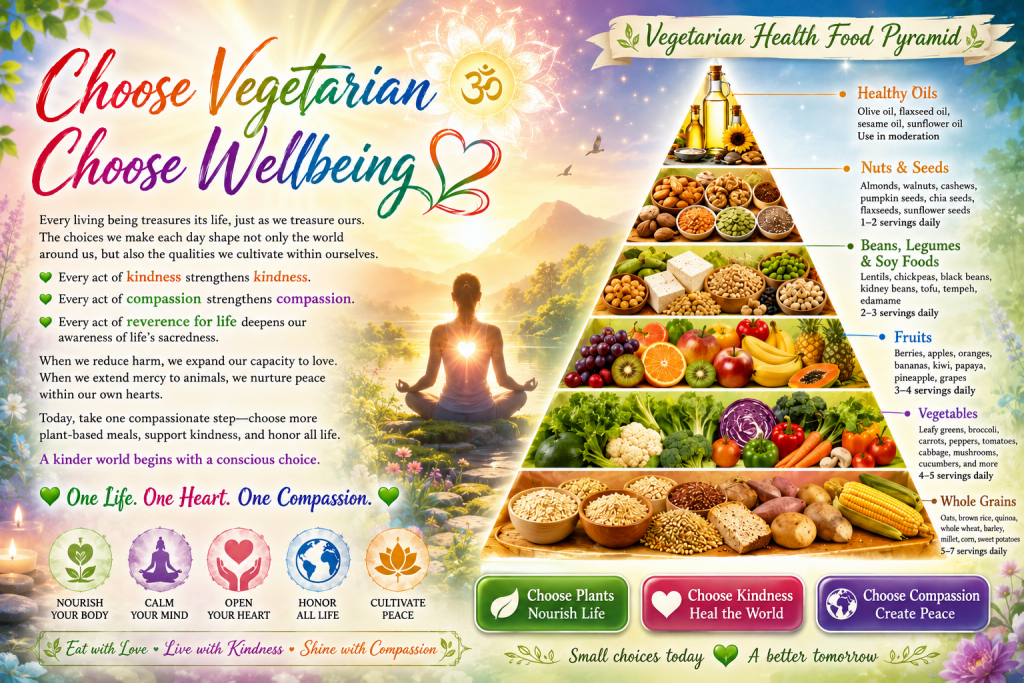
How to Support Protein, Healthy Fats, Essential Minerals, and Long-Term Wellness on a Vegetarian Lifestyle
🪷 Introduction: Thriving, Not Just Surviving, on a Vegetarian Diet 🪷
A well-planned vegetarian lifestyle can be one of the most nourishing and health-supportive ways of eating.
Rich in fruits, vegetables, legumes, nuts, seeds, herbs, and whole grains, a vegetarian diet often provides an abundance of antioxidants, fiber, phytonutrients, and plant compounds that support long-term health.
However, thriving on a vegetarian diet requires more than simply avoiding meat. To optimize wellness, it is important to ensure the body receives adequate amounts of:
🍀 Protein 🍀 Healthy fats 🍀 Essential minerals 🍀 Key vitamins 🍀 Diverse plant nutrients
🥦 The goal is not perfection.
🥦 The goal is balance.
When the body receives the nutrients it needs, energy improves, recovery strengthens, mental clarity increases, and overall well-being becomes easier to sustain.
🌱 The Foundation of Vegetarian Wellness 🌱
The healthiest vegetarian diets focus on abundance rather than restriction. Instead of asking: “What am I not eating?”
Ask: “What nutrients am I actively providing for my body every day?” A thriving vegetarian lifestyle is built upon four pillars:
🌿 Protein
🥑 Healthy Fats
🌱 Essential Minerals
🌈 Nutrient Diversity
🥕 1. Protein: The Building Blocks of Vitality 🥕
Protein is essential for: Muscle maintenance 🍀 Tissue repair 🍀 Hormone production 🍀 Immune function 🍀 Healthy aging
Many people underestimate their protein needs, especially as they become more active or grow older. Excellent Vegetarian Protein Sources
Lentils 🍀 Chickpeas 🍀 Black beans 🍀 Kidney beans 🍀 Tempeh 🍀 Tofu 🍀 Edamame 🍀 Quinoa 🍀 Hemp seeds 🍀 Pumpkin seeds 🍀 Greek yogurt (if consumed) 🍀Eggs (if consumed)
🥑 Practical Strategy 🥑
Aim to include a meaningful protein source at every meal. For example:
Breakfast: Tofu scramble, Greek yogurt with hemp seeds
Lunch: Lentil soup, Chickpea salad
Dinner: Tempeh stir-fry, Bean chili
Consistency matters more than perfection.
🥕 2. Healthy Fats: Fuel for the Brain and Hormones 🥕
Healthy fats support: Brain function 🍀Hormonal balance🍀 Cell health🍀 Nutrient absorption🍀 Energy production
Some vegetarians consume plenty of carbohydrates but not enough healthy fats. Plant-Based Sources of Healthy Fats:
Avocados 🍀 Walnuts🍀 Almonds 🍀 Hemp seeds 🍀 Chia seeds 🍀 Ground flaxseeds 🍀Olive oil 🍀 Sesame seeds🍀 Tahini🍀 Omega-3 Fats
Omega-3s are especially important for:
Cognitive health 🍀 Heart health🍀 Healthy inflammation regulation
Best plant sources: Flaxseeds 🍀 Chia seeds🍀 Hemp seeds🍀 Walnuts
Including these foods daily can help support overall well-being.
🥕 3. Essential Minerals: The Hidden Keys to Energy and Balance 🥕
Many health challenges are not caused by a lack of calories but by a lack of essential minerals.
Magnesium: The Relaxation Mineral
Magnesium supports: Sleep quality 🍀Muscle function🍀Stress resilience
Energy production🍀Nervous system balance🍀
Rich Sources: Pumpkin seeds 🍀 Hemp seeds 🍀 Almonds🍀 Cashews 🍀Spinach 🍀 Swiss chard 🍀 Black beans🍀 Dark chocolate
Calcium: More Than Bone Health
Calcium supports: Bones🍀 Teeth 🍀 Muscle contractions 🍀 Nerve communication
Rich Sources : Calcium-set tofu 🍀 Bok choy 🍀 Kale 🍀 Sesame seeds 🍀 Tahini 🍀Fortified plant milks 🍀 Yogurt (if consumed)
Potassium: The Mineral of Cellular Vitality
Potassium helps regulate: Hydration 🍀 Blood pressure🍀 Muscle function 🍀 Nervous system health 🍀
Rich Sources : Sweet potatoes 🍀 Potatoes 🍀 Bananas 🍀 Avocados 🍀 Lentils 🍀 Beans 🍀 Leafy greens 🍀 Coconut water
Iron: Supporting Energy and Oxygen Transport
Iron supports: Energy levels 🍀 Oxygen delivery 🍀 Cognitive performance 🍀
Vegetarian Sources : Lentils 🍀 Beans 🍀 Tofu 🍀 Pumpkin seeds 🍀 Quinoa 🍀 Dark leafy greens
Improve Absorption: Pair iron-rich foods with vitamin C-rich foods: Citrus fruits 🍀 Bell peppers 🍀 Kiwi 🍀 Strawberries 🍀 Broccoli
Zinc: Supporting Immunity and Repair
Zinc contributes to: Immune function 🍀 Wound healing 🍀 Hormone production
Rich Sources: Pumpkin seeds 🍀 Hemp seeds 🍀 Cashews 🍀 Chickpeas 🍀 Lentils 🍀 Oats
🥕 4. Key Nutrients Vegetarians Should Monitor 🥕
Vitamin B12, B12 is essential for:
- Nervous system health
- Red blood cell production
- Energy metabolism
Sources include: Eggs, Dairy products, Fortified foods, Supplements when appropriate
Vitamin D, Vitamin D supports: Immunity, Mood, Bone health, Sources include: Sensible sunlight exposure, Fortified foods,
Supplements when needed Iodine, Iodine supports healthy thyroid function.
Sources include: Iodized salt, Sea vegetables such as nori or wakame
🥕 The Power of Nutrient-Dense Herbs and Greens 🥕
Certain herbs and greens can complement a healthy diet by providing beneficial plant compounds. Consider Including:
🌿 Nettle Leaf 🌿 Moringa 🌿 Parsley 🌿 Cilantro 🌿 Dandelion Greens 🌿 Alfalfa Sprouts
While herbs are not major sources of protein or fats, they can contribute valuable micronutrients and phytochemicals.
🥑 Seven Action Steps to Optimize Vegetarian Health 🥑
1. Build Every Meal Around Protein
Ask: “Where is the protein in this meal?”
Make protein the foundation, not an afterthought.
2. Add Healthy Fats Daily
Include: Avocado, Nuts, Seeds, Olive oil. These foods support brain health and satiety.
3. Eat the Rainbow
Aim for a colorful plate. Different colors provide different nutrients and protective compounds.
4. Prioritize Mineral-Rich Foods
Regularly consume: Pumpkin seeds, Hemp seeds, Leafy greens, Beans, Lentils.
These foods help support magnesium, zinc, iron, and calcium intake.
5. Support Digestion
Nutrients must be absorbed to be useful.
Healthy habits include: Eating slowly, Chewing thoroughly, Staying hydrated
Managing stress, Consuming adequate fiber
6. Move Daily
Movement supports: Circulation, Strength, Metabolism, Mental health
Examples: Walking, Yoga, Tai Chi, Cycling, Strength training
7. Prioritize Recovery
Health is built during recovery.
Focus on: Quality sleep, Stress management, Time in nature, Meaningful relationships
🥑 Beyond Nutrition: The Whole-Person Approach to Wellness 🥑
True wellness extends beyond food. A healthy body thrives when supported by:
✨ Purpose ✨ Connection ✨ Creativity ✨ Joy ✨ Rest ✨ Nature ✨ Meaningful relationships
💖 Food nourishes the body. A balanced life nourishes the whole person 💖
🪷 Conclusion: Building a Strong and Vibrant Vegetarian Life 🪷
A vegetarian lifestyle can provide exceptional support for long-term health when approached with intention and balance. By prioritizing:
Adequate protein, Healthy fats, Essential minerals, Key vitamins, Diverse whole foods
you create a strong foundation for vitality, resilience, and well-being.
The path to optimal health is rarely found in a single superfood, supplement, or trend. It is built through consistent daily choices.
🌱 Small actions, repeated over time, create extraordinary results 🌱
When nourishment, movement, rest, and purpose come together, the body is better able to maintain balance, support healing, and express its full potential.
💜 May your vegetarian journey be one of vitality, strength, balance, and vibrant well-being 💜