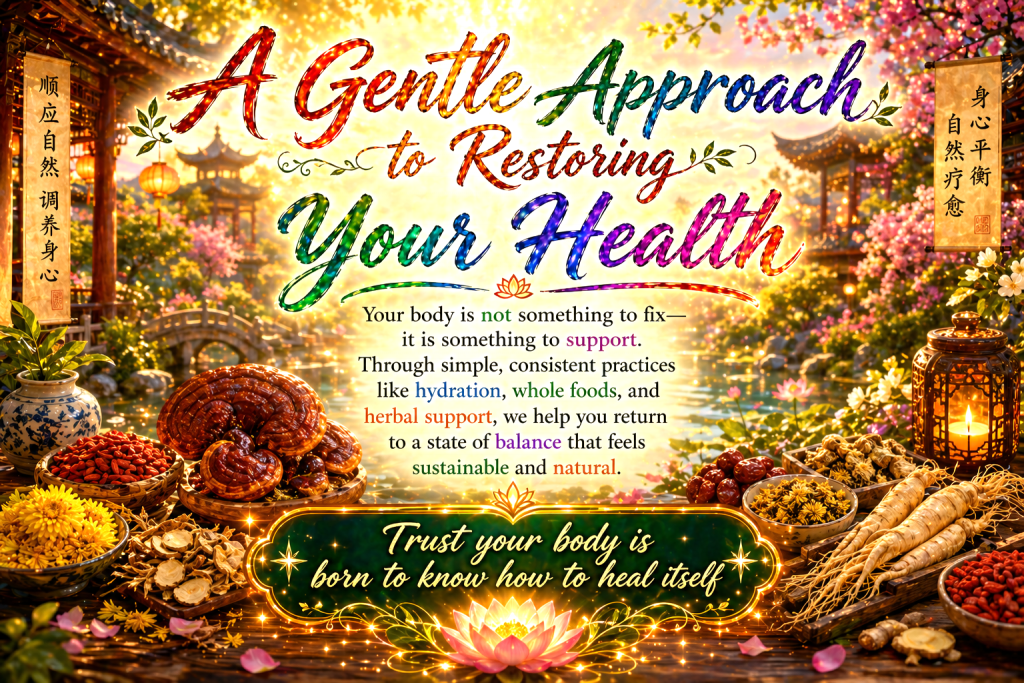
Your body is not broken.
It has always been listening, adjusting, and responding—long before you were taught to question it.
Within you exists an intelligence that regulates, restores, and protects, not as a concept, but as a living process unfolding in every moment. Your heart adjusts without asking. Your cells repair without instruction. Your system is always moving toward balance.
Yet many have been taught to look outside themselves for every answer. To see symptoms as failures. To believe that healing must come from something external.
This belief creates distance from what is already working within.
There is another way to begin again.
Your breath is one of the simplest access points back into this inner intelligence. It is not only air moving through the lungs. It is a bridge into your nervous system, your circulation, and your capacity to regulate.
- When the breath becomes steady, the body begins to remember its rhythm.
- When the rhythm returns, the system softens.
- When the system softens, balance becomes possible again.
Nothing new is added. Something is remembered.
Your body is not broken.
It is responding. And your breath is one of the ways you can meet it there.
Actionable Steps: Returning to Balance
These are not techniques to “fix” the body, but ways to re-establish communication with it.
1. Pause Before Intervention
Before reaching for a solution, take 60 seconds.
Sit. Notice your body.
Ask quietly: What is actually happening right now?
This interrupts the reflex to override the body and begins to rebuild trust.
2. Regulate Through Simple Breath Awareness
No force, no performance.
Inhale gently through the nose for ~4 seconds
Exhale slowly for ~6 seconds
Continue for 3–5 minutes
Longer exhales signal safety to the nervous system. Safety allows regulation.
3. Name Sensation Without Judgment
Instead of “something is wrong,” try:
- “There is tightness”
- “There is heat”
- “There is fatigue”
This shifts the body from threat to observation. Observation reduces reactivity.
4. Reduce Input, Increase Listening
For periods of the day:
Step away from constant stimulation (screens, noise)
Sit or walk quietly
Let the body settle without interruption
Healing often requires less input, not more.
5. Support the Body’s Existing Functions
Return to simple foundations:
- Hydration
- Sleep rhythm
- Gentle movement
- Time outdoors
These are not basic—they are regulatory anchors.
6. Use Breath During Moments of Escalation
When stress rises:
- Slow the exhale first
- Relax the jaw, shoulders, and belly
- Stay with the breath until the intensity decreases
You are not stopping the reaction—you are guiding it back to baseline.
7. Build Consistency Over Intensity
Small, repeated moments of regulation are more effective than occasional extremes.
The body learns through repetition, not force.
Expanded Reflection: “Your Body Is Not Broken”
This statement can be misunderstood if taken as absolute.
The body can experience illness, dysfunction, and real physiological breakdown. That is part of being human.
But “not broken” points to something deeper:
Even when symptoms arise, the body is still attempting to adapt, protect, or compensate.
Pain, inflammation, fatigue—these are often signals of process, not proof of failure.
From a grounded biological perspective:
- The nervous system shifts states to protect you
- The immune system activates to respond
- Hormonal systems adjust to perceived demand
These responses can become dysregulated over time, especially under chronic stress or imbalance. But dysregulation is not the same as the absence of intelligence.
It is intelligence under strain.
Breath becomes relevant here not as a mystical tool, but as a direct lever into the nervous system:
- Slower breathing influences heart rate variability
- It shifts the balance between stress (sympathetic) and recovery (parasympathetic) states
- It changes blood chemistry (oxygen and carbon dioxide balance)
Through this, breath can gently support the body’s return toward a state of regulation.
So when it is said: “Your body is not broken”
A more grounded translation might be:
- Your body is still communicating.
- Your body is still adapting.
- Your body still contains pathways toward regulation—though they may need support, time, and consistency to re-emerge.
This is not a denial of suffering. It is an invitation to relate to the body differently.
Not as something to fight—but as something to understand, support, and work with.
If any part of this feels abstract, bring it back to something simple:
- One slower breath.
- One moment of noticing.
- One small act of support.
That is where the return begins.
Natural Nutritionist | Guide to Holistic Health and Rejuvenation
A gentle guide to restoring balance—through nourishment, natural remedies, and mindful awareness.
Explore the connection between your skin, emotions, and inner harmony.
Discover simple practices that support the body’s natural ability to heal.
This is not about fixing—but remembering.
An invitation to listen, to reconnect, and to return to wholeness.