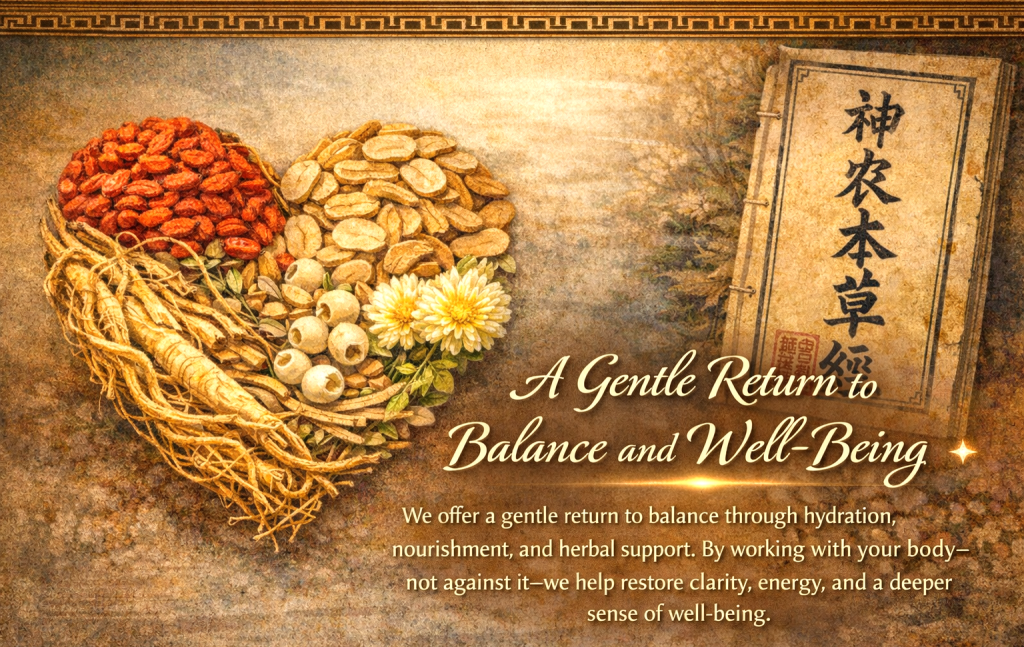
There is a subtle teaching in ancient Chinese medicine that is often overlooked:
What is not expressed through awareness is expressed through the body.
Skin conditions such as eczema are not caused by emotions alone. Yet emotions—especially those that are held, repeated, or unresolved—can shape the internal environment in which such conditions arise, persist, or intensify.
To understand this, we must move beyond the idea of emotion as something “mental,” and begin to see it as a movement of energy within the body.
I. How Emotions Become Physical Imprints
In the classical Chinese view, every emotion corresponds to a movement pattern within the body:
Some emotions cause energy to rise
Some cause it to sink
Some cause it to stagnate
Some disperse it unpredictably
When these movements become prolonged or unbalanced, they begin to leave functional imprints—not as damage, but as altered patterns of flow.
1. Worry and Overthinking → Weakening the Center
Worry is associated with the digestive system (the “center”).
When worry persists:
Digestion becomes less efficient
Fluids are not properly transformed
Dampness begins to accumulate
Over time:
Internal dampness becomes the soil in which skin conditions can develop
2. Fear → Downward Depletion
Fear causes energy to descend and contract.
When excessive or prolonged:
Vital warmth decreases
Circulation to the extremities weakens
The body becomes internally “cold”
This creates:
A system where fluids are not mobilized—leading to stagnation and accumulation
3. Frustration and Suppressed Emotion → Heat and Stagnation
Frustration is a form of constrained movement.
When not expressed or resolved:
Energy becomes trapped
Internal pressure builds
Heat is generated from stagnation
This can manifest as:
Redness, irritation, and inflammatory skin responses
4. Disappointment and Emotional Withdrawal → Reduced Circulation
When the system “withdraws”:
Circulation slows
Regenerative processes weaken
The skin receives less nourishment
Over time:
The body becomes less resilient to imbalance
5. Unforgiveness → Chronic Internal Holding
Unforgiveness is not just a thought—it is a form of continuous contraction.
It creates:
Persistent tension
Lack of internal movement
Subtle but constant stress signals
This contributes to:
A body that cannot fully relax—and therefore cannot fully restore
II. Why the Skin Becomes the Messenger
The skin is considered the most external layer of the body, yet it is deeply connected to:
Internal fluid balance
Circulation
Immune response
Nervous system signaling
When internal systems become imbalanced:
The body may “vent” through the skin as a way of releasing or expressing what is not resolved internally
III. The Ancient Approach: Not Suppression, But Harmonization
Ancient Chinese wisdom does not aim to “eliminate” emotions.
Instead, it teaches:
Allow movement, restore flow, and return to balance
IV. Practical Methods to Release and Resolve Emotional Imprints
1. Regulate the Breath to Regulate the System
A simple daily practice:
Sit comfortably
Inhale slowly through the nose
Exhale longer than the inhale
Let the abdomen gently expand and soften
Practice for 5–10 minutes.
Effect:
Calms the nervous system
Reduces internal tension
Allows emotional energy to settle
2. Gentle Movement to Prevent Stagnation
Walking
Stretching
Slow, mindful movement
These help:
Release what is “held” without forcing expression
3. Create Space for Emotional Flow
Instead of suppressing or analyzing:
Write thoughts down without judgment
Speak honestly in a safe space
Allow feelings to arise and pass
The goal is not to fix the emotion, but:
To prevent it from becoming fixed in the body
4. Warm and Support the Body Physically
Eat warm, cooked foods
Reduce excessive cold intake
Support digestion
Because:
A stronger internal system processes emotions more efficiently
5. Practice Gentle Release of Holding (Unforgiveness)
This does not require immediate forgiveness.
Instead:
Acknowledge the tension
Notice where it sits in the body
Allow it to soften gradually
You may ask:
“Can I release just a small part of this today?”
Even partial release restores movement.
V. A Deeper Understanding
Emotions do not “attack” the body.
They become problematic only when:
They are held too long
They are not allowed to move
The body lacks the strength to process them
Thus, healing is not about controlling emotion, but about:
Restoring the body’s capacity to flow, transform, and return to equilibrium
VI. Final Reflection
If you listen carefully, the body is not resisting you—it is communicating.
The skin is not the problem.
It is the surface expression of an internal conversation.
When that conversation becomes more fluid, more supported, more balanced—
The body no longer needs to speak through irritation.