“Mouth bitterness during awakening” can be interpreted in a symbolic or spiritual way—but in most cases, it has clear physiological explanations. Grounding here prevents confusion.
1. Why does the mouth feel bitter (especially upon waking)?
From a medical and physiological perspective, common causes include:
- Digestive and liver-related factors
- Reduced bile flow or mild bile reflux
- Late-night eating or heavy meals
- Alcohol or rich foods
- Oral and hydration factors
- Dry mouth during sleep
- Bacterial buildup overnight
- Dehydration
- Sleep and stress
- Poor sleep quality
- Chronic stress affects digestion
How Traditional Chinese Medicine interprets it
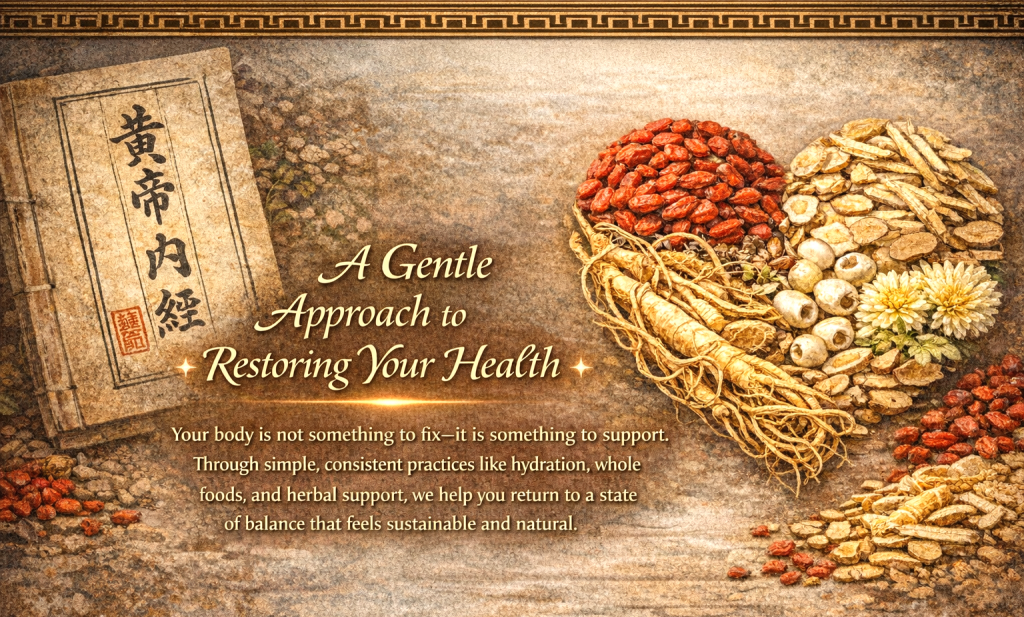
In the framework of Huangdi Neijing:
Bitter taste in the morning is often linked to “Liver–Gallbladder heat” (肝膽鬱熱)
It may also relate to:
- Emotional tension (especially frustration or suppressed anger)
- Irregular eating patterns
- Internal heat accumulation
This does not mean something mystical is happening. It usually reflects an imbalance + lifestyle pattern.
2. Using Classical Insights to Restore Balance (Grounded Application)
Drawing from both the Huangdi Neijing and Bencao Gangmu:
The aim is not to “cure everything,” but to restore functional harmony.
A. For “Bitterness” / Internal Heat Patterns
Simple corrective actions:
Eat lighter in the evening, Reduce greasy, fried, or overly spicy foods, Increase hydration (especially warm water in the morning)
Include gently cooling foods:
leafy greens, chrysanthemum tea, cucumber
B. Support Liver–Digestive Function
Maintain regular meal times, Avoid overeating at night, Gentle movement daily (walking, stretching)
From a functional view:
→ movement helps “Qi flow.”
→ digestion becomes more efficient
C. Regulate Emotional Load
In classical theory, emotional constraint affects organ function.
→ Practical translation: Unprocessed stress impacts digestion and sleep
→ Supportive steps: Journaling or expression
→ Quiet time without stimulation: Breathing practices
D. Use Herbs Carefully (Supportive, Not Primary Treatment)
From traditions described in Bencao Gangmu:
Chrysanthemum morifolium → cooling, often used for “heat” patterns
Mentha haplocalyx → light, dispersing
Glycyrrhiza uralensis → harmonizing
These are gentle supports—not cures.
3. Impactful, Grounded Steps for Daily Health
Not extreme. Not complicated. But consistent.
Step 1 — Reset the Morning
Drink warm water upon waking, Light stretching or walking, Avoid immediate phone stimulation
→ Signals the body to regulate instead of react
Step 2 — Stabilize Meals
Eat at consistent times, Avoid heavy late-night meals
→ Supports digestion and reduces morning symptoms
Step 3 — Move Every Day
20–30 minutes of light movement
→ Improves circulation, mood, and metabolic balance
Step 4 — Reduce Internal “Heat”
Less processed food, alcohol, and excess sugar, More whole, simple foods
→ Gradual reduction of inflammation
Step 5 — Create Emotional Space
5–10 minutes daily without input, Breathing, stillness, or quiet observation
→ Prevents accumulation of internal tension
4. A Clear Perspective
Bitterness in the mouth is usually not a sign of “awakening.”
It is more often a signal:
→ Digestion needs support
→ stress load is elevated
→ rhythm is off
When interpreted calmly, it becomes useful—not alarming.
Closing Reflection
Health does not return through dramatic intervention.
It stabilizes through:
→ rhythm, reduction of excess, small, repeatable actions
→ Classical teachings point in this direction—not toward complexity, but toward alignment.
If the body is listened to without exaggeration, it often speaks in simple signals.