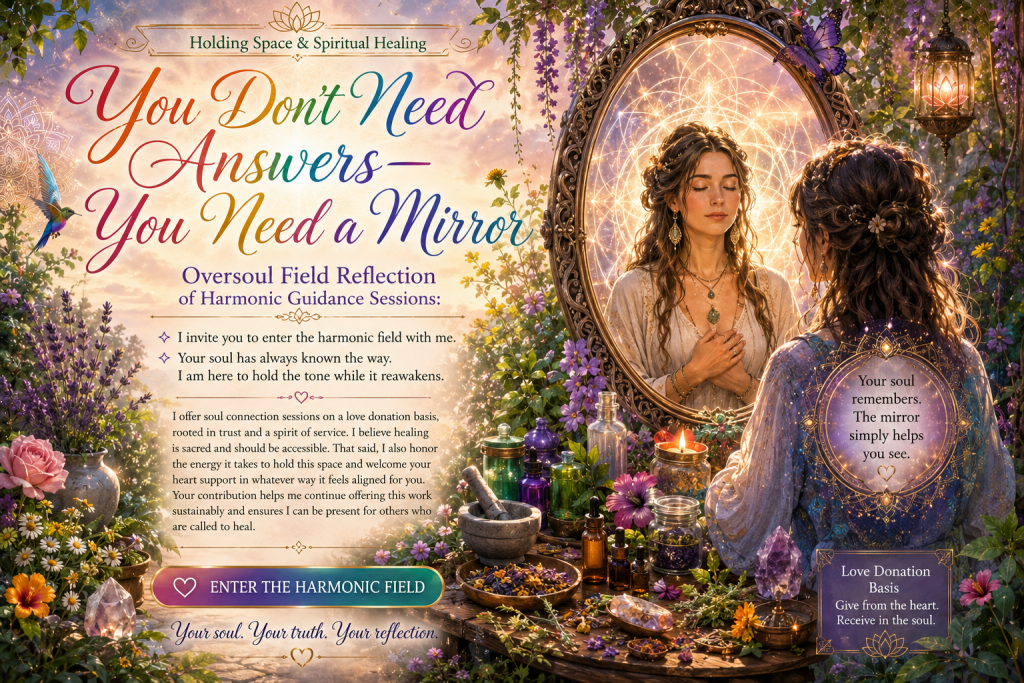
Human life often appears mysterious. At times events seem random, unpredictable, and even unfair. Yet many philosophical and spiritual traditions suggest another possibility: that the universe operates in a paradoxical way. What appears outside us may, in subtle ways, reflect what exists within us.
This idea does not claim that every event is caused by personal thought alone. Life is far more complex than that. Yet there is a deeper observation many people eventually encounter: our inner state strongly influences how we perceive, interpret, and interact with the world around us.
In that sense, life can begin to feel like a mirror.
Understanding this mirror does not mean controlling the universe. It means learning to observe the relationship between inner consciousness and outer experience. When this relationship becomes clear, individuals often discover new ways to live with confidence, coherence, and joy.
The Paradox of the Universe
A paradox is something that appears contradictory but reveals deeper harmony when understood more fully.
The universe often seems paradoxical in several ways:
We seek control, yet life flows best when we learn to cooperate with it.
We chase happiness externally, yet lasting peace arises internally.
We try to change the world, yet the most powerful change begins within ourselves.
This does not mean that the outer world is merely an imagination. Rather, the quality of our perception acts as a lens through which we experience life.
Two people may encounter the same situation and respond completely differently. One may see opportunity where another sees threat. One may experience gratitude where another experiences resentment.
The event is the same.
The experience is different.
This difference arises from internal beliefs, emotional patterns, and expectations.
In this way, life can function as a mirror—not because it obeys every thought, but because it continually reveals the state of our inner orientation.
The Mirror of Inner Beliefs
Our beliefs act as interpretive frameworks.
If someone believes the world is hostile, they may unconsciously notice and remember experiences that confirm that belief. If someone believes people are generally kind, they may become more open and therefore encounter more kindness.
The mirror operates through several subtle mechanisms:
Attention – We notice what aligns with our expectations.
Interpretation – We assign meaning to events based on prior beliefs.
Response – Our reactions influence how others respond in return.
Thus the inner state and the outer experience begin to form a feedback loop.
Recognizing this mirror is not about self-blame when life becomes difficult. Many events exist far beyond personal control. Instead, the mirror invites a more empowering question:
What part of my inner orientation can I refine to meet life more wisely?
Using the Mirror for Growth
When life is understood as a mirror, challenges become opportunities for self-awareness.
For example:
Repeated conflicts may reveal patterns in communication or boundaries.
Persistent stress may reveal habits of over-control or unrealistic expectations.
Moments of deep joy may reveal alignment with meaningful values.
Instead of asking only “Why is this happening to me?”, the mirror invites a gentler inquiry:
“What might this moment be reflecting about my inner state?”
This shift transforms life from a battlefield into a classroom.
Techniques for Working with the Mirror of Life
1. Practice Conscious Observation
The first step is learning to observe thoughts and emotions without immediate judgment.
A short daily practice can help:
Sit quietly for five minutes.
Notice your thoughts as they arise.
Allow them to pass without trying to suppress or cling to them.
This simple awareness creates distance between reaction and choice. When awareness increases, the mirror becomes easier to read.
2. Question Limiting Beliefs
Many internal beliefs were formed unconsciously during childhood or through repeated experiences.
When a negative pattern appears, gently ask:
Is this belief absolutely true?
What evidence supports or contradicts it?
What would change if I viewed this differently?
Sometimes a single reframed belief can shift years of emotional patterns.
3. Align with Meaningful Values
A coherent life arises when actions align with deeply held values such as compassion, honesty, creativity, and service.
When choices reflect these values, inner conflict decreases. The mirror begins to reflect greater harmony because the internal structure has become more coherent.
Ask regularly:
Does my current action reflect the person I genuinely wish to become?
4. Cultivate Gratitude and Appreciation
Gratitude trains the mind to notice supportive elements already present in life.
This practice does not deny difficulty. Instead, it broadens perception so that challenges exist alongside moments of beauty, kindness, and opportunity.
A daily habit of writing three small moments of gratitude can gradually reshape perception toward abundance.
5. Respond Instead of React
Reactive responses often arise from fear, anger, or old conditioning.
A more powerful approach is to pause briefly before responding to situations.
That pause allows the question:
What response aligns with clarity rather than impulse?
Over time, this shift from reaction to response changes how relationships and circumstances unfold.
Living Confidently in the Mirror
When the mirror principle is understood, life becomes less about fighting external circumstances and more about cultivating internal coherence.
Confidence arises not from controlling every outcome but from knowing that:
thoughts can be examined
Beliefs can evolve
Responses can become wiser with practice
In this way, the mirror of life becomes a guide rather than an adversary.
Each experience—pleasant or difficult—offers information about the relationship between inner awareness and outer participation.
As that awareness grows, many people discover something quietly liberating:
Joy is not merely something that happens when circumstances are perfect.
Joy naturally emerges when the inner world becomes clear, coherent, and aligned with the heart’s deeper values.